
Dubai's Luxury Property Market in 2025: What Developers Really Need to Know
Knight Frank tracked 500 residential transactions above $10 million in Dubai in 2025. Here is what is driving this demand, and how developers can protect margins through pre-construction discipline and commercial cost management.
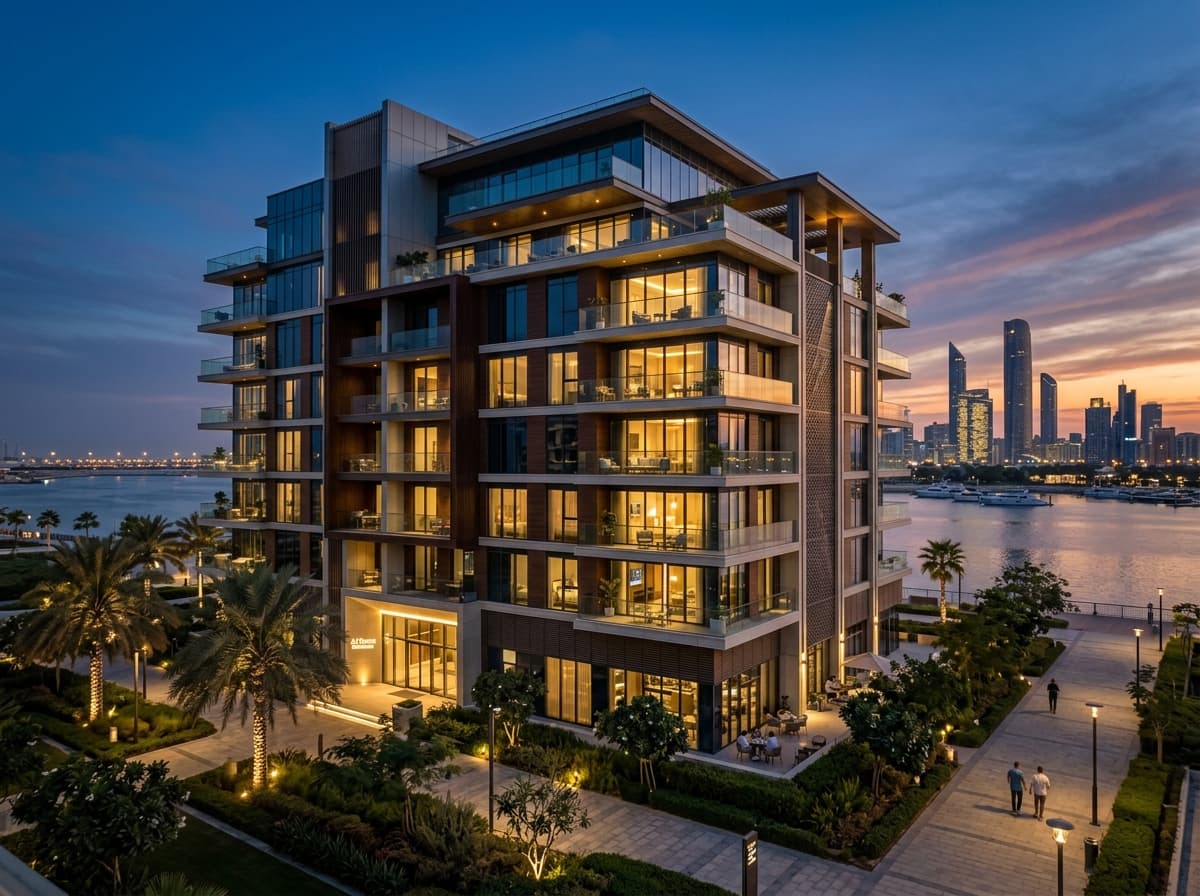
If you've been paying attention to Dubai's property market over the last year, the numbers are pretty staggering. The luxury residential sector has grown in ways that seemed almost impossible just a few years ago.
Knight Frank's data from 2025 tells the story pretty clearly. They tracked 500 residential transactions above $10 million last year—up from 435 in 2024. That's not just a small bump. We're talking about $9.05 billion in total transaction value, compared to $7.09 billion the year before. And just in Q4 alone? 143 deals over $10 million. That's a 39% jump from Q3. There were also 68 transactions above $25 million during the year.
So yeah, the demand is definitely there. But here's the thing—if you're a developer, the real question isn't just "is demand strong?" It's "what's actually driving this demand, and how do I position my project to capture it?"
Because here's what we've learned: a strong luxury market creates real opportunities, but it also raises the bar. Buyers expect better design, higher specifications, amazing amenities, reliable delivery timelines, and they're prepared to pay for it. But that also means the commercial decisions you make before breaking ground can make or break your project's success.
How Much Has Actually Changed?
The growth we're seeing in 2025 didn't just happen overnight.
Looking back at Knight Frank's historical records, Dubai had only 30 residential sales above $10 million in 2020. Then it went to 112 in 2021, 227 in 2022, 434 in 2023, 435 in 2024, and 500 in 2025.
That's not just momentum. That's a structural shift in the market.
What's changed is what Dubai is actually offering. It's not just about selling a property anymore. Developers are building waterfront communities, branded residences with luxury credentials, high-end villa collections, integrated lifestyle destinations with private amenities. The market has evolved to expect all of that as part of the package.
For developers, this matters because it directly affects your cost equation. When buyers expect premium façades, specialized MEP systems, imported finishes, high-end kitchens and bathrooms, landscaped outdoor spaces, pools, smart-home technology, private wellness facilities, and meticulously detailed interiors—well, that all adds up. Fast.
And yes, each of those decisions adds value. But each one also has a real cost attached to it. You need to be strategic about where that money goes. This is where strategic pre-construction planning becomes invaluable.
Where's the Demand Actually Concentrated?
Looking at the Q4 2025 figures, the activity is spread across several communities, both established and newer.
Palm Jumeirah led the way with 28 transactions above $10 million in Q4. Palm Jebel Ali came in second with 22, followed by La Mer with 16, Jumeirah Second with 13, and Tilal Al Ghaf with 9.
But here's what's interesting from a developer's perspective: Palm Jebel Ali. The community is still being built out—it hasn't even reached completion—yet it's already capturing a massive share of ultra-prime activity.
That tells you something important about how buyers are thinking. They're not just looking at completed buildings. They're buying into the quality and potential of the entire destination. They're evaluating the location, the community vision, the overall experience.
For developers, that's actually a big opportunity. It means you're not just building a building. You're building around a location and an experience. And that changes how you should think about your project strategy. You can afford to be ambitious about the concept and the destination—but you need to make sure the financial model actually works.
Bigger Sales Doesn't Mean Unlimited Budgets
Here's where people often get it wrong.
When you see these record-breaking sales numbers and multi-million-dollar transactions, it's tempting to think that higher prices mean construction costs become less important. That land costs more, so construction costs are just a smaller percentage of the total value, right?
Actually, it's often the opposite.
A luxury development can burn through serious capital before you sell a single unit. Land acquisition, design fees, consultants, permits, financing, construction, specialized subcontractors, interiors, landscaping, marketing—it all adds up. And when your specification gets more ambitious, costs can escalate quickly.
So the real commercial question isn't "How much can we afford to spend?" It's "Where should we actually spend it?"
A high-end stone finish in a prominent entrance might genuinely improve the buyer experience. But a technical upgrade hidden from view? That might not move the needle at all in terms of market perception. An expensive façade system might improve both performance and aesthetics. But another design change might just add complexity without creating equivalent value.
These aren't just design decisions. These are commercial decisions.
That's why good cost management and planning is so valuable. It helps you establish realistic budgets and feasibility benchmarks before design decisions become locked in and expensive to change. You then refine the cost plan as you move through feasibility, concept design, design development, and tender stages.
Why Your Budget Needs to Evolve With Your Design
One of the biggest mistakes in development is treating the initial budget like it's set in stone.
At feasibility stage, maybe you've got a concept, a rough idea of the floor area, and some sense of your target market. At that point, your numbers will obviously be preliminary.
But here's the thing—as your design develops, your cost plan should develop right alongside it.
Your project team should be able to see exactly how each design decision affects the budget at each phase. That means asking some practical questions early on:
- Does what we're proposing actually fit the budget we set?
- Are our cost assumptions realistic for the current UAE market?
- What elements are really driving the cost?
- Are there design changes that could save money without damaging the value proposition?
- Is our procurement strategy the right one for this project?
- Have we built in enough contingency for specialist materials and imports?
- What happens to the budget if the timeline shifts?
A properly structured cost plan turns these questions from guesses into measurable data.
Pre-construction services should cover feasibility budgets, elemental cost plans, procurement strategy, tender documentation, and market benchmarking—all aligned to recognized industry standards like RICS measurement standards. For a high-value development, that kind of early discipline can make a massive difference to your bottom line.
Value Engineering Isn't Just About Buying Cheaper Materials
People often misunderstand value engineering. They think it means finding the cheapest option for everything.
That's actually too narrow.
Real value engineering is about examining the relationship between cost, function, quality, performance, and value. Those things aren't all the same thing.
Let's say you've got a detailed interior specification. Your commercial team looks at one particular finish and identifies three possible approaches: keep the original specification; replace it with a cheaper product; find an alternative that maintains the visual and technical performance but costs less.
That third option? That's where good value engineering actually adds real value.
The same principle applies across façade systems, MEP equipment, joinery, landscaping, lighting, external works—all the major packages. The strongest cost decisions usually happen before you lock in procurement commitments.
Live budget monitoring, value engineering analysis, tender evaluation, cost forecasting, and commercial reporting throughout delivery—that's what keeps you in control.
The Risk Doesn't Stop When You Hire the Contractor
Winning a contractor tender doesn't mean the commercial risk is over. In fact, that's when a different set of risks actually begin.
Once construction starts, you're exposed to variations, design changes, procurement delays, programme pressure, claims, and differences between what was originally scoped and what actually gets delivered. And this is especially true for luxury developments because of all the bespoke requirements and interfaces between consultants, contractors, specialist suppliers, and interior teams.
A change that looks minor during design can have much bigger ripple effects once it hits the site. Change a façade detail and suddenly you're affecting drawings, materials, fabrication, lead times, installation schedule, and programme. Change something in an interior package and you're affecting procurement and coordination across multiple trades.
That's why changes need to be evaluated commercially before they're just instructed. You need to understand the real cost and schedule impact.
Risk registers, contract administration, change-order evaluation, and claims mitigation—these are the tools that help you maintain control as the project progresses.
Why the Quantity Surveyor Role Is More Important Than Ever
The scale of Dubai's luxury market also underscores just how important the quantity surveyor role has become.
The QS isn't just measuring quantities or producing bills of quantities. On a major development, they're involved in feasibility analysis, cost planning, tendering, valuations, variations, cost reporting, and final accounts.
That continuity matters because decisions made at one stage ripple through to another stage. A decision made during design affects the tender price. The tender strategy affects how much competition you get from contractors. The contract structure affects how exposed you are to variations. A variation affects your forecast final cost. And the final account becomes the learning for your next project.
Chartered Quantity Surveying services across feasibility, design, tender, construction, and final account—all measured and managed under RICS professional standards—that kind of consistency in decision-making can be really valuable when you're undertaking complex luxury schemes.
Reports Are Only Useful If They Help You Make Decisions
Cost reporting matters, but only if it actually helps someone make a decision.
A monthly report showing what you've spent versus budget is important, sure. But developers also need to know what's likely to happen next.
How much have you actually committed to? How much have you spent? What's the forecast to complete? Which variations are already approved? Which changes are still under review? Are there emerging risks that haven't shown up in the cost report yet?
A forward-looking approach gives you the chance to act before a forecast turns into a final cost. Independent financial reporting, cost audits, earned value analysis, post-construction commercial analysis—that's the kind of visibility that matters.
For larger developments, that visibility can be just as important as the original budget.
So What Does This All Mean for Developers Moving Into 2026?
Knight Frank's numbers show that the ultra-prime residential segment entered 2026 with considerable momentum. The number of $10 million-plus sales has increased dramatically since 2020. Transactions above $25 million hit a new annual high in 2025.
But here's the reality check: not every luxury development will perform the same way. Location, product quality, timing, pricing, competition, financing, delivery timelines, and overall market conditions will all shape how an individual project performs.
So the lesson isn't really "assume the market will keep going up." It's "make sure your project is actually commercially sound under realistic assumptions."
Before you commit serious capital, you should have a clear picture across each core development parameter:
Feasibility
Does this development actually make commercial sense based on realistic construction and development assumptions?
Cost
Has the project been independently benchmarked against current market conditions?
Specification
Does the quality level you're proposing actually support your intended market position, or are you spending money without a clear return?
Procurement
Is your procurement approach the right fit for your project's size, complexity, programme, and risk profile?
Risk
What could actually impact the budget or timeline, and how will you manage those risks?
Delivery
What processes will keep you in control of costs once construction is underway?
Final Account
Will the project finish with a clear, defensible understanding of where the capital went?
These questions matter whether you're building a single ultra-luxury villa, a boutique residential scheme, or a larger branded development.
Strong Demand Still Requires Commercial Discipline
Dubai's luxury residential market has clearly expanded. But demand doesn't remove the fundamentals of property development.
Land still needs to be assessed carefully. Design still needs to be tested. Costs still need to be benchmarked against current market rates. Contracts still need to be managed. Variations still need to be challenged. Cash flow still needs to be monitored.
The difference is that today's luxury developments are often more ambitious and more complex than earlier projects. That makes the commercial function something that's integral to your development strategy from the start, not something you add in after the design is done.
At Auri Bespoke, we work with property developers and project teams across the UAE on pre-construction planning, cost management, risk and contract, financial oversight, and chartered quantity surveying.
Our objective is straightforward: give you a clearer commercial picture before major decisions get made, and then maintain that visibility all the way through delivery.
Dubai's luxury property market has created a real opportunity. The projects that actually make the most of that opportunity still need something beyond strong market demand: a clear understanding of what the project should cost, where the risks are, and how you'll protect value from concept to completion.
Market data referenced in this article is based on Knight Frank's "Record-breaking 500 US$10 million+ homes sell in Dubai during 2025", published 12 January 2026.
About Auri
Auri Bespoke Commercial Partners is an independent quantity surveying and cost consultancy serving UAE, GCC and international projects. Our quantity surveying and cost management services are directed by a Chartered Quantity Surveyor holding professional membership of the Royal Institution of Chartered Surveyors (RICS).
Need commercial clarity on your project?
Speak with Auri about cost planning, quantity surveying and commercial management.
Discuss Your Project